
Blown-in insulation in Richland, WA - even coverage across the whole ceiling
Upstairs running hot or the power bill creeping up? We seal the attic's gaps first, then blow in fill that covers the whole ceiling.
- Fully licensed and insured.
- Free estimates at your property.
- We respond within 1 business day.
Does your Richland attic need blown-in insulation?
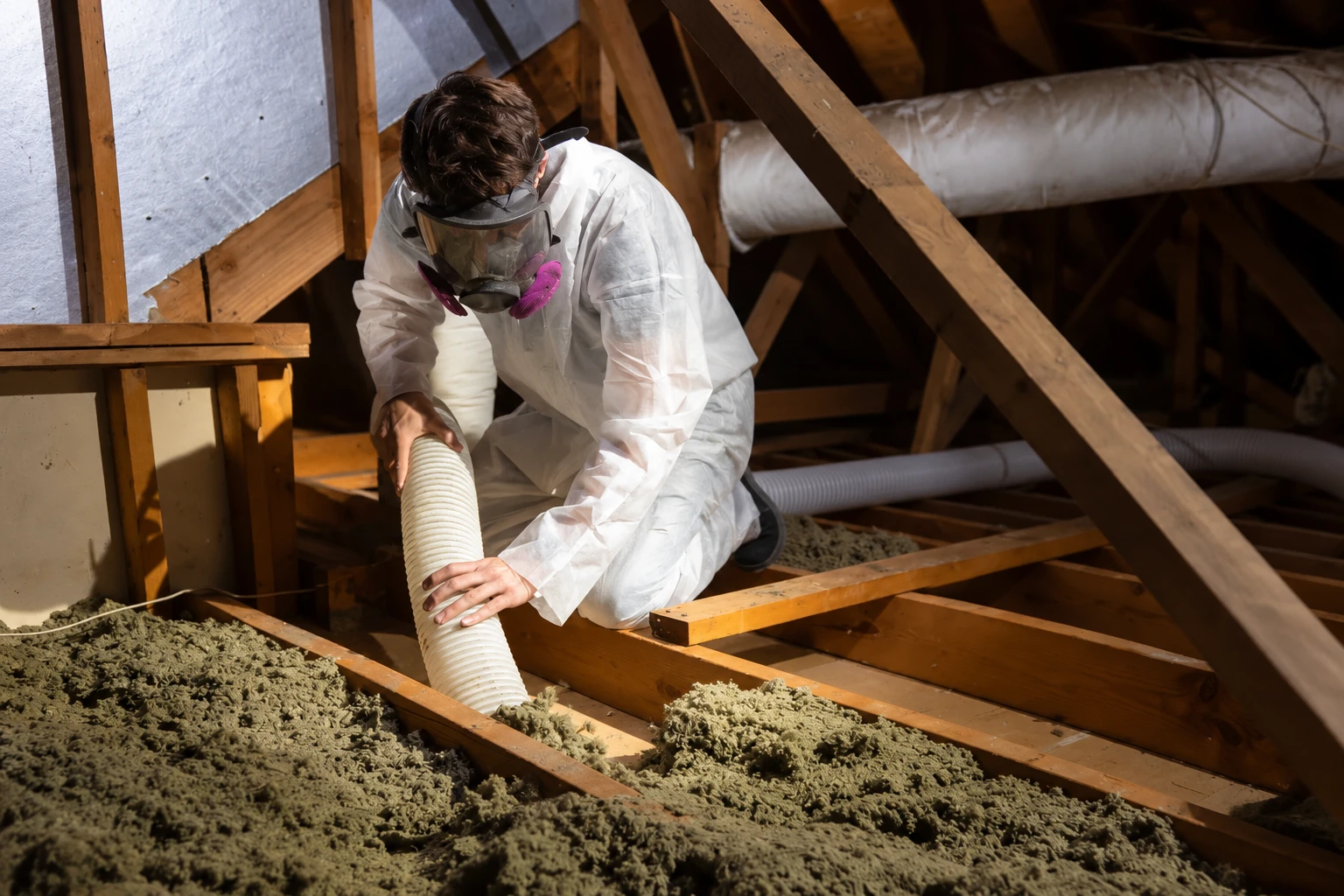
Blown-in insulation is loose fiberglass, cellulose or rock wool blown through a hose across your attic floor. In Richland we put it in after the gaps are sealed, so it covers the whole ceiling and slows the heat moving through it in July and January.
Most people call us because upstairs runs hot, a room feels drafty or the power bill keeps climbing, and the attic is usually the first place I look. The price depends on how big the attic is, how many inches are already up there and which material you pick. It also depends on anything that has to happen first, like a repair, pulling out bad fill or attic air sealing, which closes the gaps around pipes, wires and lights. Those first steps also set the schedule, and you'll see your own figure on the written estimate once I've been up there. We're based in Richland and work across the Tri-Cities and the cities around it, including some across the state line in Oregon.
How can you tell your attic needs more insulation?
Upstairs stays hot
If the bedrooms or the room over the garage stay warm long after sundown, summer heat is usually coming straight through a thin attic. Until that changes, the AC keeps running long and you keep paying for it.
Drafts near lights and the hatch
A cold draft around a ceiling light or the attic hatch usually means air is moving through gaps up there. More insulation alone won't stop it, so those gaps get sealed before any fill goes in.
Stains or a musty smell
A water stain on the ceiling or a damp smell from the attic often points to a roof leak that has soaked the old fill. That has to be fixed before anything new goes in, because water left alone keeps working into the framing.
How we put in blown-in insulation, in the right order
I start by looking across your attic floor at what's already up there, because most attics can take new fill right over the old, and I only bring up removal when what's there is wet, moldy or smells bad. Before anything gets blown in, we take care of whatever has to come first and seal the gaps around pipes, wires, lights and the hatch, so the new fill isn't fighting a draft. We put baffles at the eaves so the vents stay open and the fill can't spill into them, and we fit a metal or mesh barrier around any older can lights that aren't rated to touch insulation. Then we blow it in dense and even, all the way out to the edges where attics usually run thin. That way it covers the whole ceiling and holds up as it settles.
Blown-in fill is often one piece of a bigger fix. If the drafts and cold floors go past the attic, our home insulation work looks at the walls and crawl space too. When the old fill is soaked, moldy or full of droppings, insulation removal clears it out so the new layer starts clean.
Loose fiberglass or cellulose
This suits most attics, because loose fill tops up what's there and settles around joists, wires and odd corners. We'll talk through which material fits your attic and your budget at the estimate.
Foam when the ducts live up there
Spray foam insulation costs more, but it seals air while it insulates, which can pay off when your ductwork runs through the attic. Otherwise, sealing the gaps and topping up with loose fill usually wins, and that's what I'd recommend.
Get a written estimate for your attic's blown-in insulation
Tell us the attic's rough size and anything you've noticed, like damp insulation or old wiring. We reply within one business day, and the on-site estimate is free with no obligation.
(509) 946-4684- Based in
- Richland, WA 99352
- Hours
- Mon–Fri: 7 AM–10 PM, Sat–Sun: 6 AM–11 PM
What happens after you call about blown-in insulation?
Here's how a job runs from your first call to the walkthrough at the end, so you know who you'll see and what you'll get.
Call and set a visit
We get back to you and set a time for me to come out and look over the attic, walls or crawl space. I'll also ask about anything in the house that burns fuel, like a furnace or water heater.
Read your written estimate
You get a written estimate that lists each step in the order we'd do it, so you can see what the price covers. If part of it can wait, I'll tell you, because I'd rather do that than sell you work you don't need.
Work done, then a walkthrough
On the day, we protect your home and do the work in the order the estimate lays out. Before we pack up, I walk you through what we did.
Why Richland homeowners call Comfort Richland Insulation Company for blown-in work
The owner comes out himself
I come out to look at the job and write the estimate, then work alongside our installers on the day. The person who planned your attic is up there doing it.
A trade learned from my dad
I grew up hauling bags into attics with my dad and worked beside him for years before I started this business in 2023. He taught me that the part nobody sees still has to be done right.
Licensed and insured in Washington
We're fully licensed and insured, so the work in your attic is covered. Washington lets you look up any contractor yourself, and the questions below show you how.
On this job, the order matters most, so the fixes and sealing get done before the fill goes in. Ask for an estimate and I'll come take a look.
Blown-in insulation and attic work around Richland
Before a job starts, I check with the city or county building office for your address, and if a permit is needed, we take care of it and let you know where things stand. On jobs around here, we often find attics that were insulated once and never touched again. By then the fill has packed down below the joists, the eave vents are half buried and the edges are thin. We open the vents back up and fill those edges first. We see the same attics on jobs in Kennewick and West Richland.
For Benton County, the agency on the state's weatherization list is Benton-Franklin CAC, at 509-545-4042 or info@bfcac.org, if you'd like to talk with them before or alongside an estimate from us.
Questions about blown-in insulation in Richland
How do I know if I need more attic insulation?
If the insulation in your attic sits level with or below the tops of the floor joists, you probably need more. A look across the attic floor with a flashlight tells you whether a job is worth pricing, and I'll check how many inches are up there when I come out.
How much does blown-in insulation cost in Richland?
Blown-in insulation across the US usually costs about $1,000 to $2,300 per job, and that's a national figure for a typical attic, not a Richland quote. Cellulose can cost more per square foot than blown fiberglass, especially dense-packed, and any sealing, removal or repairs that come first add to it. Your own price comes on the estimate after I've seen the attic.
How do I check an insulation contractor in Washington?
Washington requires every construction contractor to register with the state Department of Labor & Industries, and state law requires them to be bonded and insured. L&I's Verify tool shows whether a business has an active registration and a paid-up workers' comp account covering its employees. It also lists any safety violations and lawsuits against the contractor's bond.
What is the best way to insulate an attic, blown-in or batts?
For most attics, blown-in loose fill is the better choice, because it usually costs less than batts and covers more fully. It fills odd-shaped spaces and wraps around wiring, pipes and framing where batts leave gaps, though what it costs to put in still varies from attic to attic.
What should be fixed in an attic before adding insulation?
Damp insulation from a leaky roof should be fixed by a professional before anything new goes in. Old knob and tube wiring, the bare wires on ceramic posts found in houses wired before 1930, can be a fire hazard where it touches insulation, so it gets repaired first. Gray, pea-size, flaky vermiculite stays undisturbed until an approved lab tests it for asbestos, and I check for all of this before any work starts.
What causes blown-in insulation to settle?
Loose fill settles some over time, and when it goes in too light, it leaves holes and voids where heat gets through. That's why it's fair to ask any crew how they get it in dense enough to resist settling, and I'm glad to explain how we do it at the estimate.
Related services that often go with blown-in insulation
Home insulation
When cold floors and drafty rooms show up beyond the attic, we look at the walls and crawl space to find where your heat is going.
Insulation removal
Old fill that's soaked from a roof leak, moldy or fouled by animals has to come out first, or the new layer just covers the problem.
Service areas for our blown-in insulation work
Comfort Richland Insulation Company is based in Richland, WA. The eight cities below have their own pages, including Pasco and Prosser, and we work in other cities around them too, some across the state line in Oregon.
Richland, WA
Have the owner look at your attic
Call (509) 946-4684 or send the form, and one look will tell you whether your attic needs a top-up, some sealing first or nothing yet.