
Commercial insulation in Richland WA - a building opened up once and sealed right
Drafty offices, a loud metal shop or a power bill that keeps climbing? We find the cause, then insulate in the right order.
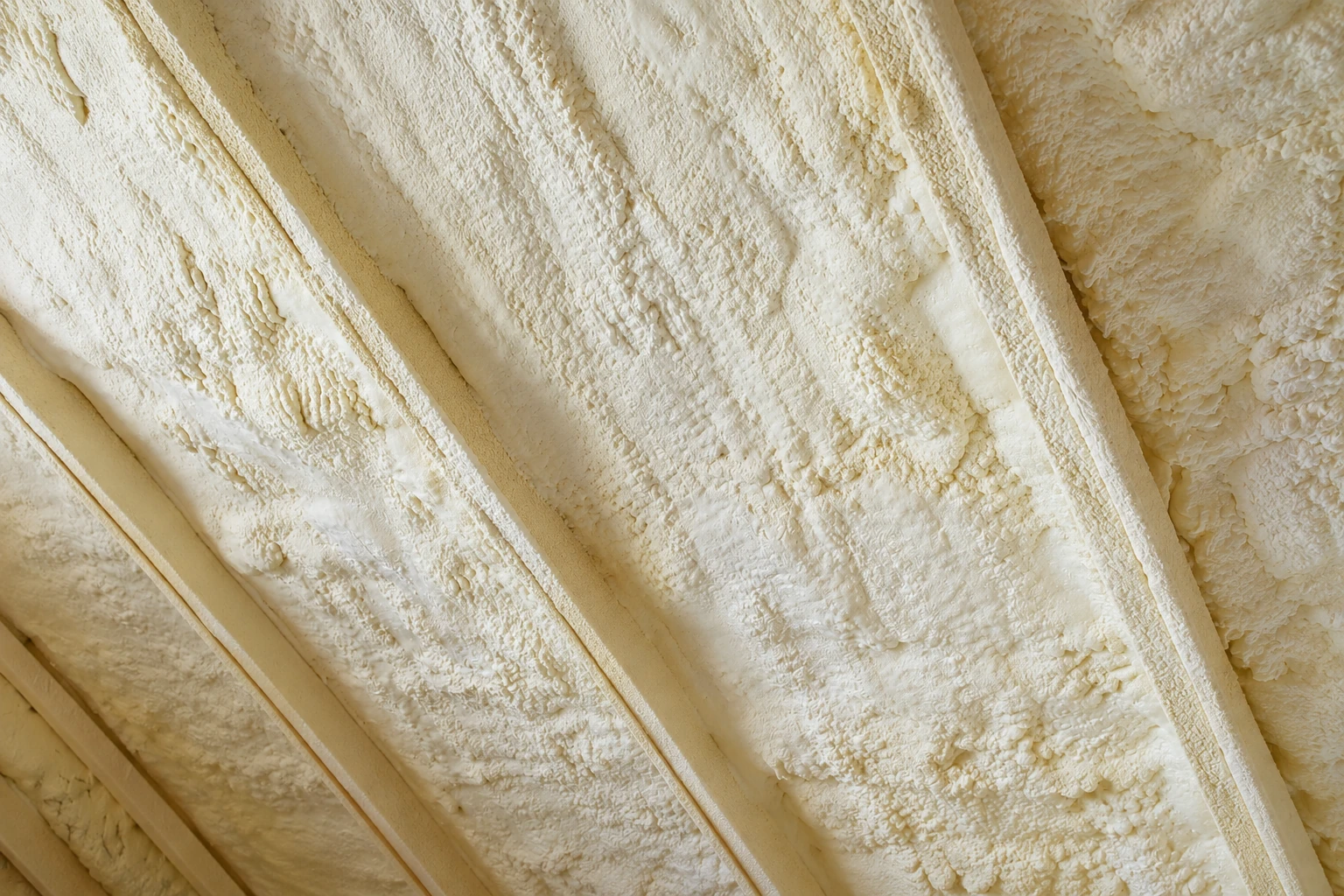
- Fully licensed and insured.
- Free estimates at your property.
- We respond within 1 business day.
What does insulating a commercial building in Richland involve?
Commercial insulation in Richland usually means adding insulation at the roof, sealing the gaps where outside air gets in and blowing insulation into the walls of a building that's already standing. Those are the usual steps for upgrading an existing shop, office or warehouse, sometimes along with a white roof.
Most of these calls come from a business owner or property manager who keeps hearing the same complaints from the people inside, like a back office that never warms up, a shop that roars every time the wind picks up or a power bill that climbs every season. The price turns on the building's size, how the roof and walls are built, what's already in them and how easy they are to reach. The schedule usually turns on what else is planned for the building, so your estimate is where you'll see the figure and the order of work for your own space.
How do you know your building needs better insulation?
Cold spots along outside walls
People who sit near an outside wall keep a sweater on their chair, or one room never feels like the rest. That usually means thin or missing insulation in the wall, or air leaking around it, and until it's fixed the heat runs harder across the whole building to warm one corner.
A loud, echoing metal building
Rain on the roof drowns out conversation, or voices bounce around the shop floor. Bare or thin insulation is usually the reason, and the same gaps that let the noise in are letting your heat out.
Drips or rust overhead
Water drips from the ceiling on a dry morning, or rust spots show up on the metal. That usually means damp indoor air is reaching cold metal through torn or missing facing, and left alone it soaks the insulation and keeps eating at the panels.
How we handle commercial insulation
For business owners and property managers, I try to line the work up with a roof job, an equipment change or another project already on the calendar, so the building only gets opened up once. On the job we start by checking what's already there, and anything soaked or full of droppings comes out first because new insulation laid over it just hides the problem. Then we seal the gaps around pipes, vents and openings, since insulation can't slow heat with air moving through it, and only after that do we add insulation, keeping it full depth at the edges where it's easy to come up short.
Moisture is the other half of most commercial jobs. If part of your building sits over a crawl space, a crawl space vapor barrier keeps damp from the ground out of the floor framing, and vapor barrier installation in walls and ceilings keeps moist indoor air off cold surfaces where it would turn to water.
Roof insulation and air sealing
This suits most existing offices, storefronts and shops, because the roof is usually the easiest place to add depth and the most gaps are easy to reach from there. It goes furthest when it's done during a re-roof, while everything is already open.
Insulation blown into walls
This fits framed buildings with hollow walls that are empty or only partly filled, because blown-in insulation, loose fill sent through a hose, can fill the cavity through small holes. That means we don't have to tear the walls open to get it in.
Metal building insulation
Metal buildings are usually insulated with rolls of glass fiber draped over the frame, with a facing that blocks moisture turned toward the inside. On a new building the erector puts it in before the metal skin goes on, so settle the insulation with your erector, and on an existing one we check whether that facing is still whole. Done right, it also cuts outside noise and the echo inside.
Get a written estimate for insulating your building
Send the form and we'll reply within one business day to set a time for me to come out. The estimate is free, done at your building, and there's no obligation to go ahead.
(509) 946-4684- Based in
- Richland, WA 99352
- Hours
- Mon–Fri: 7 AM–10 PM, Sat–Sun: 6 AM–11 PM
What happens when you call us about your building?
Here's how a commercial job runs with us, from your first call to the walk-through before we leave, so you know who you'll see at each step.
Call or send the form
We get back to you and set a time for me to come out. If a roof or equipment job is already scheduled, tell us the date so we can plan around it.
I walk through the building
I look over the roof space, the walls and any crawl space, and ask about anything in the building that burns fuel, like a furnace or water heater. Sealing a building changes how air moves around that equipment, so I want to know before we plan anything.
You get the estimate in writing
It lists each step in the order we'd do it, so you can see exactly what you're paying for. If part of the job could wait for a later project, I'll tell you.
We work, then walk through
On the day, we protect your space and do the work in the order the estimate lists. Before we pack up, I walk you through what we did.
Why Richland building owners call Comfort Richland Insulation Company
The owner writes your estimate
I come out to look at the building and write the estimate, then I work alongside our installers on the job. The person who planned the order of the work is the one there making sure it's followed.
Learned the trade from my dad
I started out hauling bags into attics as a kid and worked beside my dad for years before I started this business in 2023. He taught me that the part of the job nobody sees still has to be done right.
Fully licensed and insured
Washington requires every construction contractor to register with the state Department of Labor & Industries, and we're fully licensed and insured. State law also puts the contractor's registration number on every estimate and bid, so look for it on any bid you get.
On a commercial building, the order of the work matters more than the material, so the first step is a look at what's already there. Send us a note through the contact page or call (509) 946-4684, and I'll set a time to come out.
Commercial insulation and vapor barriers in Richland
If your building is big enough to fall under Washington's Clean Buildings Performance Standard, its reporting date depends on its size. The largest covered buildings had a June 1, 2026 date, Tier 2 buildings over 20,000 and up to 50,000 square feet report by July 1, 2027, and the last dates fall on June 1, 2028, so if yours is covered, plan any insulation work with your date in mind. The same law offers incentives to owners who make efficiency improvements before they're required to. Before any job starts, I check with the city or county building office for that address, and if a permit is needed, we take care of it and let you know where things stand.
Commercial calls around the Tri-Cities run from metal shops and warehouses to small offices and storefronts, and we see the same mix on jobs in Kennewick and Pasco. Whatever the building, we look at what's there first and match the work to it.
Questions about commercial insulation in Richland
How much does commercial insulation cost in Richland, WA?
The cost comes from your building, so I price each job after seeing it. Past size and construction, the big swings come from old insulation that has to come out first, ceilings high enough to need a lift and how much sealing the building needs before anything new goes in. The written estimate breaks the work into steps, so you can see where the money goes.
What is the best way to time insulation work on a commercial building?
The best time is alongside something you already have planned, like a capital improvement, a major system replacement, a big roof or wall project, a code upgrade, or a change of owner or refinancing. A federal retrofit training guide lists those as the signs a building is ready for an upgrade and calls timing key. If none of them is coming up and the building isn't giving you trouble, the insulation can usually wait.
What is the best way to insulate the walls of a commercial building?
Continuous rigid insulation, an unbroken layer of stiff boards across the wall, is a strong choice because it stops heat from slipping out through the studs and cuts drafts. In walls where moisture is a worry, it also keeps the spot where moisture would condense out past the framing cavity, the space inside the wall. It fits best when the outside of the building is being redone anyway.
Does the City of Richland help businesses pay for energy upgrades?
Yes, the city's Commercial Lighting and Energy Efficiency Program offers loans, rebates and incentives to Richland businesses. It covers lighting, heating and cooling, windows and doors, and select other improvements, so ask the city whether your insulation work counts before the job gets scheduled.
How do I know if my building counts as commercial under Washington's energy code?
Washington's energy code treats every building outside its residential group as commercial. That residential group covers one- and two-family homes, townhouses and some buildings three stories or less, so shops, offices and an apartment building over three stories all fall on the commercial side.
What should I do if my building's old insulation might contain asbestos?
Ask any contractor you're considering about Washington's asbestos requirements before you hire, because contractors who work with asbestos have extra education, exam and licensing rules to meet. If I see material at the visit that could be a concern, I'll point it out before any work is planned.
Moisture control that goes with commercial insulation
Crawl space vapor barrier
Ask about it when floors over a crawl space feel damp or smell musty, since wet ground under the building works against the insulation laid above it.
Vapor barrier installation
Worth adding where damp indoor air keeps reaching cold metal or framing, the kind of spot that shows up as ceiling drips or stained walls.
Service areas around Richland and the Tri-Cities
Comfort Richland Insulation Company is based in Richland, Washington, and works across the Tri-Cities and the cities around it, including some across the state line in Oregon. Eight of those cities have their own page here, from West Richland to Umatilla, Oregon.
Richland, WA
Book a look at your building's insulation
Have the square footage, the roof and wall type and any planned roof or equipment work handy when you call (509) 946-4684, so one visit covers everything.